Published: Product Innovation | Dialysis Consumables
Bicarbonate-based dialysate has become the standard in modern hemodialysis, offering superior physiological buffering compared to older acetate formulations. The Bicart—short for bicarbonate cartridge—represents a significant advancement in how dialysis centers prepare and deliver this essential treatment solution. These pre-filled dry powder cartridges have transformed dialysate preparation from labor-intensive liquid mixing to convenient, automated on-site reconstitution.
What is a Bicart?
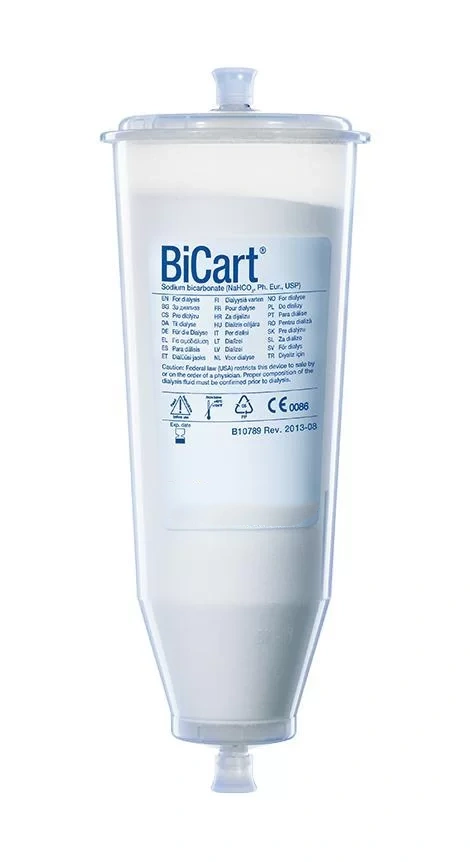
A Bicart is a sealed, pre-filled cartridge containing sterile, powdered sodium bicarbonate specifically formulated for hemodialysis use. The cartridge is designed to mount directly onto compatible dialysis machines, where purified water is automatically pumped through the powder to create a saturated bicarbonate concentrate solution. This solution is then proportionally mixed with acid concentrate and additional purified water to create the final dialysate solution at the precise electrolyte concentration required for treatment.
Bicarts are available in various sizes—common formulations include 650g, 720g, and 1150g of sodium bicarbonate powder—to accommodate different treatment durations and dialysate flow rates. The cartridge housing is typically made from medical-grade polypropylene, designed for easy handling, secure machine connection, and complete powder dissolution during use.
Advantages Over Liquid Bicarbonate
Dry powder Bicarts offer several compelling advantages over traditional liquid bicarbonate concentrates. First and foremost is storage efficiency—dry powder takes up significantly less space than equivalent volumes of liquid concentrate, reducing warehouse requirements and shipping costs substantially. Shelf life is also considerably longer, as dry sodium bicarbonate remains stable for extended periods without risk of bacterial growth or degradation.
From a clinical perspective, Bicarts reduce the risk of contamination. Because the bicarbonate remains in dry, sealed form until the moment of use, there is no opportunity for bacterial proliferation—a known concern with pre-mixed liquid bicarbonate solutions. Each cartridge provides a precisely measured dose, ensuring consistent dialysate chemistry treatment after treatment.
Environmental benefits are also significant. Bicart cartridges generate less plastic waste than equivalent liquid containers, and the reduced transportation weight lowers the carbon footprint associated with product distribution. Many dialysis centers pursuing “green dialysis” initiatives have adopted Bicart systems as part of their sustainability strategies.
Manufacturing and Quality Assurance
Bicart production requires pharmaceutical-grade manufacturing standards. The sodium bicarbonate powder must meet strict purity specifications—free of contaminants, particulates, and microbial load. Automated filling systems dispense precise powder quantities into each cartridge housing, with weight verification ensuring dosage accuracy. The cartridges are then hermetically sealed to maintain powder integrity and prevent moisture ingress during storage.
Quality control measures include powder purity testing, fill weight verification, seal integrity testing, and dissolution testing to ensure the powder completely dissolves at the flow rates encountered during dialysis treatment. Production facilities operate under GMP (Good Manufacturing Practices) conditions, with all processes validated and documented for regulatory compliance.
The Future of Dialysis Concentrate Delivery
As dialysis technology continues to advance, Bicart systems are evolving to support new treatment modalities including online hemodiafiltration (HDF) and individualized dialysate prescriptions. Some newer systems integrate both acid and bicarbonate dry concentrates in cartridge form, further simplifying dialysate preparation and reducing handling requirements for clinical staff.
With the global dialysis population projected to exceed 5 million patients by 2030, efficient, reliable dialysate delivery systems are more important than ever. Bicart dry powder technology represents a proven, practical solution that benefits dialysis providers, patients, and the environment alike—making it a cornerstone of modern hemodialysis practice worldwide.