Published: Healthcare Manufacturing | Urology Products
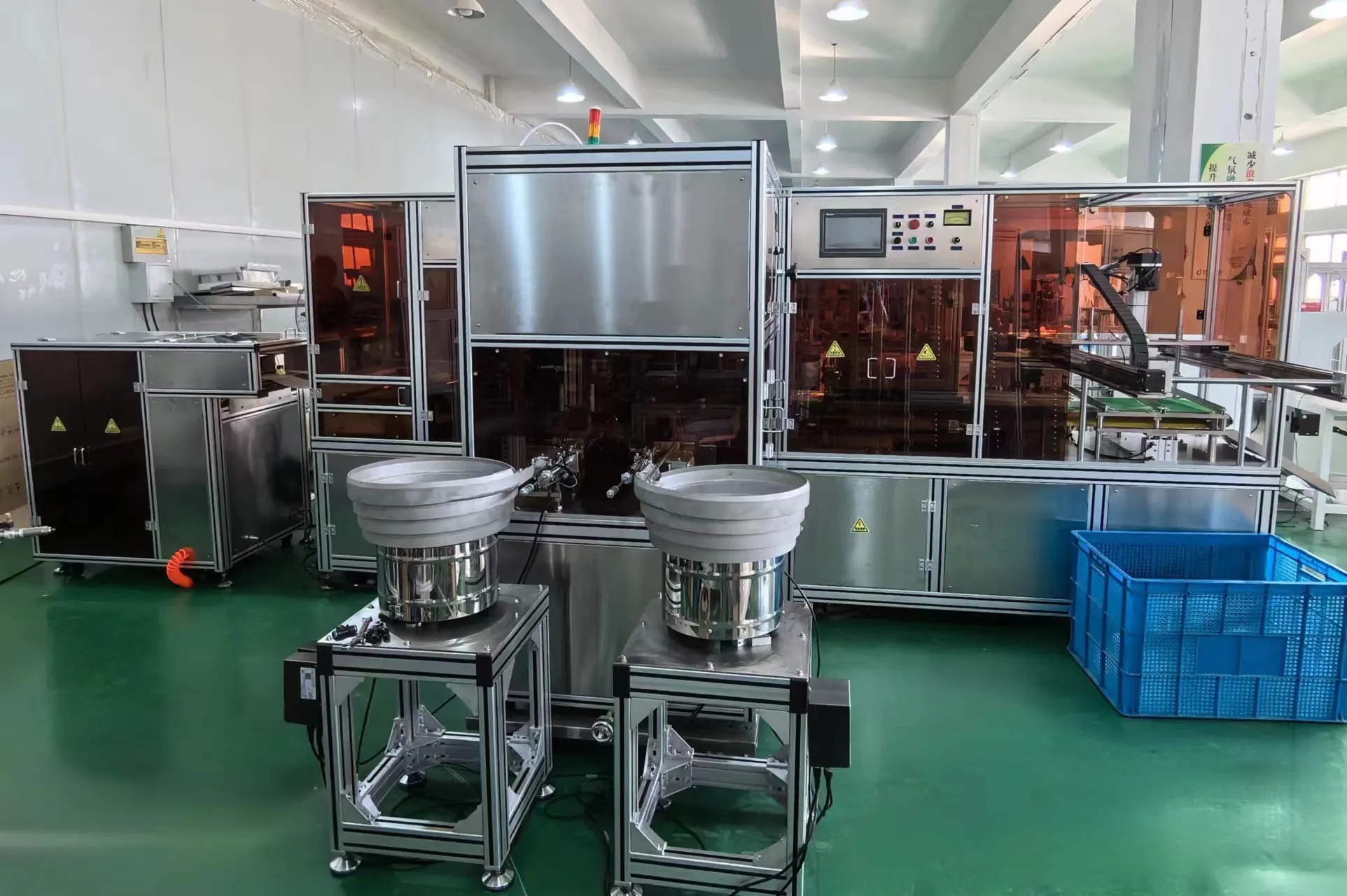
Urine collection bags are essential medical devices used in hospitals, long-term care facilities, and home healthcare settings worldwide. These seemingly simple products require sophisticated manufacturing technology to ensure leak-proof performance, biocompatibility, and reliable function. Urine bag assembly machines are specialized production systems that automate the complete manufacturing process from raw materials to finished, ready-to-sterilize products.
The Importance of Quality Urine Bags
Urine bags serve critical functions in patient care. They collect and measure urinary output for patients with urinary catheters, post-surgical patients, and individuals with incontinence issues. A high-quality urine bag must be completely leak-proof to prevent skin irritation and infection risks, feature accurate volume measurement markings, include anti-reflux valves to prevent backflow, and be made from biocompatible materials that won’t cause skin reactions during extended wear.
How Urine Bag Assembly Machines Work
Urine bag assembly machines are typically integrated production lines that combine multiple manufacturing processes. The process begins with film feeding and cutting, where medical-grade PVC or TPU sheeting is cut to precise bag dimensions. High-frequency (HF) welding or heat sealing stations then form the bag perimeter, creating strong, consistent seals that define the collection chamber shape.
The machine then assembles and attaches the functional components. Tubing ports are welded to the bag body, and inlet tubing is cut to specified lengths and attached. Drainage valves or taps—essential for emptying the bag—are installed and tested for proper operation. Anti-reflux valves, which prevent urine from flowing back toward the patient, are precision-assembled within the tubing pathway.
Additional components may include sample ports for urine specimen collection, bed sheet clips or hanging straps, and leg bag straps for ambulatory patients. Measurement markings are printed directly onto the bag surface with medical-grade inks that remain legible throughout use.
Quality Testing and Validation
Given the infection control implications, urine bag assembly machines integrate comprehensive quality testing. Leak detection stations pressurize each assembled bag and monitor for pressure decay that would indicate seal failures. Valve function testing ensures drainage taps open and close smoothly while maintaining a complete seal when closed. Anti-reflux valve performance is verified through flow testing in both directions.
Vision inspection systems check for proper component placement, print quality of measurement markings, and cosmetic defects. All test results are automatically recorded for batch traceability and regulatory compliance documentation.
Product Variety and Production Efficiency
Urine bag assembly machines support production of various product types, including standard bedside drainage bags (typically 2000ml capacity), leg bags for mobile patients (500-750ml), and pediatric urine collection bags. Modern lines can produce 1,500 to 3,000 completed bags per hour, with minimal operator intervention required.
As global populations age and demand for home healthcare solutions grows, the market for quality urine collection products continues to expand. Manufacturers with automated assembly capabilities are positioned to deliver the volume, consistency, and cost-effectiveness that healthcare providers and distributors require in this important product category.