Published: Engineering Insights | Needle Technology
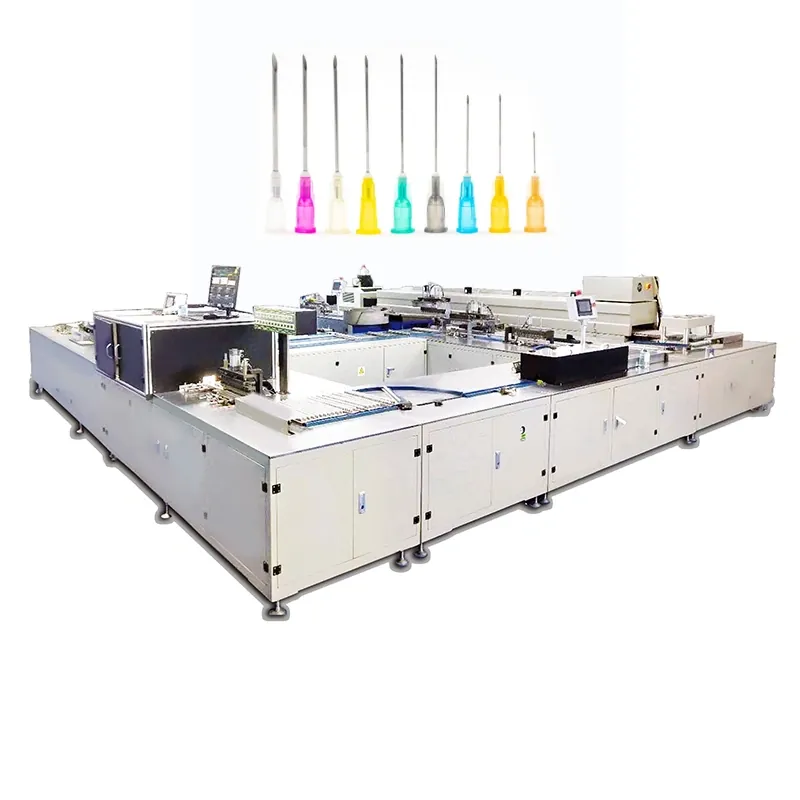
Hypodermic needles are marvels of micro-engineering. Each needle consists of an ultra-thin stainless steel cannula, a precision-molded plastic hub, and a protective cap—all assembled with micron-level accuracy. Hypodermic needle automatic assembly machines are specialized production systems designed to manufacture these critical medical components with extraordinary precision, speed, and consistency.
Components of a Hypodermic Needle
A standard hypodermic needle comprises three main components. The cannula—the sharp, hollow needle tube—is typically made from surgical-grade stainless steel tubing, ground to a precise bevel angle for optimal skin penetration. The hub, usually injection-molded from medical-grade polypropylene or polycarbonate, provides the luer connection interface for attaching to syringes or infusion sets. The protective cap shields the needle point and maintains sterility until use.
The Assembly Process Explained
Hypodermic needle assembly machines orchestrate a complex sequence of operations with remarkable speed and precision. The process begins with cannula feeding and orientation, where needle tubes are sorted and positioned for insertion. Hub components are fed from separate vibratory bowl feeders and precisely aligned in assembly fixtures.
The core assembly operation involves inserting the cannula into the hub and applying medical-grade adhesive—typically epoxy resin—to create a permanent, leak-proof bond. Precision dispensing systems apply exact volumes of adhesive to ensure consistent bond strength without excess material that could contaminate the needle lumen. After gluing, the assemblies pass through curing ovens or UV curing stations where the adhesive reaches full strength.
Additional process steps may include silicone coating (silicification) of the needle surface to reduce friction during skin penetration, burr inspection to verify clean, sharp needle points, and cap installation to protect the finished needle.
Quality Assurance at Micro-Scale
Quality control in needle assembly requires inspection technologies capable of detecting microscopic defects. Advanced CCD vision systems inspect needle points for burrs, hooks, or imperfect bevel angles at magnifications that reveal features measuring just a few microns. Blockage testing verifies that each needle lumen is completely open and unobstructed. Pull force testing confirms the cannula-hub bond meets minimum strength requirements.
High-speed inspection systems can evaluate up to 45 needles per second, automatically rejecting any units that fail quality criteria. This level of automated quality assurance ensures that every needle produced meets the strictest medical standards.
Production Capabilities and Versatility
Modern hypodermic needle assembly machines support a wide range of needle gauges—from ultra-fine 30G insulin needles to larger 14G cannulas used for blood transfusion. Production speeds vary by needle size but typically range from 200 to 500 needles per minute. The machines accommodate different hub styles, including luer lock, luer slip, and specialized safety needle designs.
As injection-based therapies expand—from biologics and vaccines to aesthetic medicine—the demand for high-quality hypodermic needles continues to rise. Automated assembly technology ensures manufacturers can meet this demand while maintaining the exceptional quality and safety standards that healthcare providers and patients depend on.