Published: Industry Analysis | Blood Banking Technology
Blood bags are among the most safety-critical medical devices in existence. Each bag must maintain absolute sterility, prevent contamination, and preserve blood components through collection, processing, storage, and transfusion. Blood bag assembly machines are highly specialized production systems that manufacture these life-saving products with extraordinary attention to quality, integrity, and regulatory compliance.
The Complexity of Blood Bag Design
Modern blood bags are far more sophisticated than simple collection containers. A standard single blood bag system includes the primary collection bag, donor tubing with needle assembly, sampling pouches for laboratory testing, and various ports and transfer devices. Multi-bag systems—used for component separation into red cells, plasma, and platelets—add satellite bags connected by sealed transfer tubing. All connections must maintain a completely closed, sterile system.
Materials are carefully selected for biocompatibility and blood component preservation. Medical-grade PVC with specialized plasticizers (often DEHP-free formulations) is standard, with additive formulations designed to maintain red cell viability during storage.
The Assembly Process
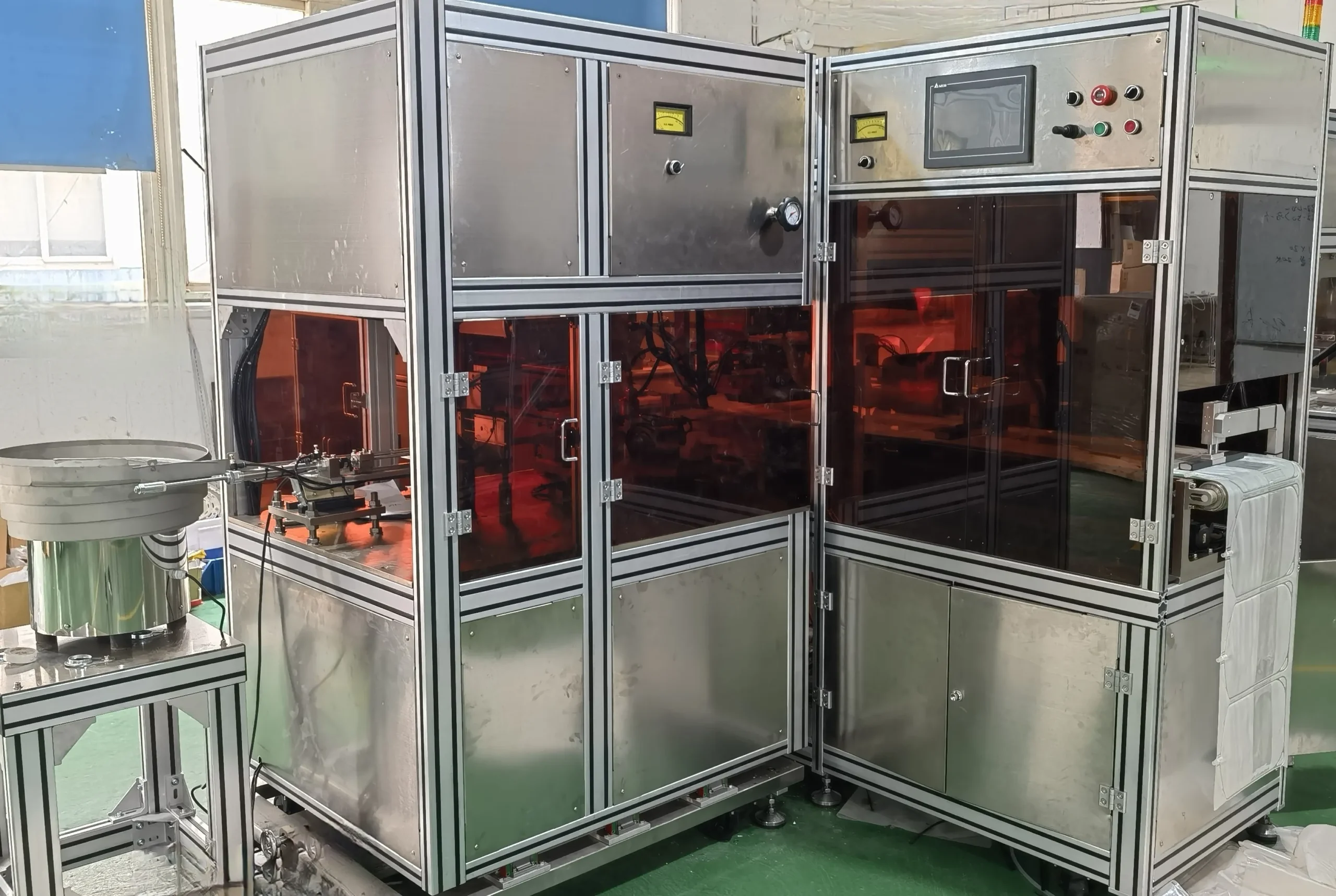
Blood bag assembly machines orchestrate a complex sequence of manufacturing operations. The process begins with film handling—precision cutting and positioning of medical-grade PVC sheets. High-frequency (HF) welding stations form the bag outlines, creating hermetic seals that define the bag chambers and internal channels. The welding process must be precisely controlled to ensure strong, consistent seals without damaging the material or creating potential leak paths.
Tube welding stations attach various tubing components—donor lines, transfer tubes, and sampling lines—to the bag body. These welds are particularly critical as they must withstand the mechanical stresses of blood centrifugation during component processing. Advanced machines use ultrasonic or HF welding technology to create molecular bonds between tubing and bag material.
Additional assembly steps include installing injection ports for adding anticoagulant solutions, attaching needle assemblies with protective sheaths, and integrating breakable cannulas or frangible pins for sealed transfer between bags. Labeling stations apply unique identification codes, blood type indicators, and regulatory information to each finished bag.
Rigorous Quality Assurance
Quality control in blood bag manufacturing is exceptionally rigorous. Every bag undergoes leak testing—typically through vacuum decay methods that can detect microscopic seal failures. Seal integrity is verified along all weld lines, including tube-to-bag connections. Burst testing confirms bags can withstand the pressures encountered during centrifugation and handling.
Automated vision systems inspect for cosmetic defects, proper component placement, and label accuracy. Sterility assurance is built into the production process itself, with machines operating in controlled cleanroom environments and using automated material handling to minimize human contact.
Meeting Global Transfusion Needs
With millions of blood transfusions performed globally each year, reliable blood bag supply is essential to healthcare systems worldwide. Modern blood bag assembly machines produce 800 to 2,000 bags per hour, supporting both single and multi-bag configurations. As blood safety standards continue to evolve—with increasing demand for leukoreduction filters, pathogen reduction technology compatibility, and DEHP-free materials—assembly machine technology continues to advance, ensuring manufacturers can meet the highest standards of blood safety and quality.