Published: Clinical Technology | Dialysis Products
For patients with end-stage renal disease, hemodialysis is a life-sustaining treatment that artificially filters waste products from the blood. At the heart of every dialysis treatment is the bloodline tubing set—the sterile conduit that carries blood from the patient to the dialyzer (artificial kidney) and back. These specialized tubing sets are precision-engineered medical devices that must perform flawlessly during each treatment session.
What is a Hemodialysis Bloodline Set?
A hemodialysis bloodline tubing set is a complete circuit of medical-grade tubing and integrated components designed specifically for use with hemodialysis machines. The set typically includes two main lines: the arterial line, which draws blood from the patient’s access (fistula, graft, or catheter) and delivers it to the dialyzer, and the venous line, which returns filtered blood to the patient.
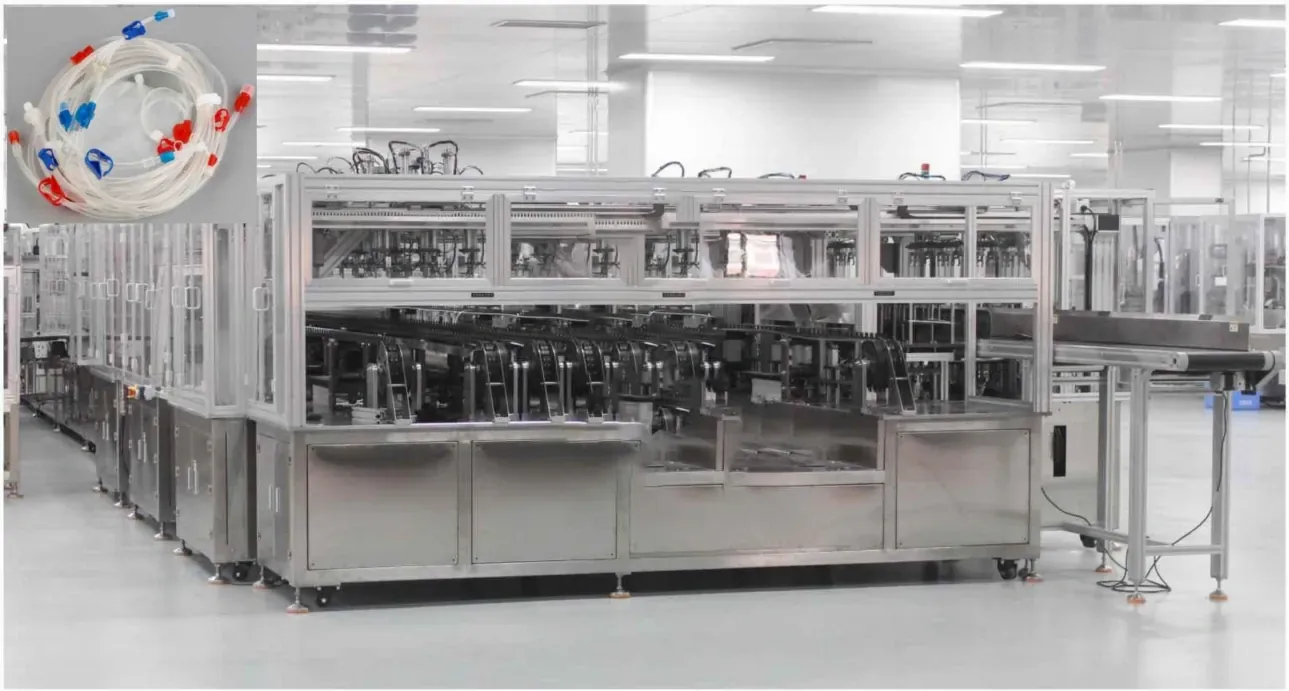
Integrated components include blood pump segments designed to work with the dialysis machine’s peristaltic pump, drip chambers for air detection and pressure monitoring, pressure monitoring ports with transducer protectors, heparin injection ports for anticoagulant delivery, and various connectors for dialyzer and patient access attachment. Some sets also incorporate priming volumes, sampling sites, and safety features like air bubble detectors and clamp mechanisms.
Materials and Design Considerations
Bloodline tubing sets are manufactured from medical-grade materials selected for blood compatibility and mechanical performance. PVC is the most common base material, though DEHP-free and PVC-free formulations are increasingly available to address concerns about plasticizer exposure during long-term dialysis treatment. The tubing must be flexible enough to work with peristaltic pumps yet durable enough to withstand repeated compression without failure over a typical 4-hour treatment.
Color coding is standard—arterial lines are typically red and venous lines blue—allowing clinical staff to quickly identify and properly connect the circuit. Tubing diameters are carefully specified to achieve target blood flow rates (typically 200-500 ml/min for adult treatments) while minimizing hemolysis (blood cell damage).
Manufacturing and Quality Standards
Production of bloodline tubing sets requires cleanroom manufacturing environments and rigorous quality control. Each component—tubing segments, chambers, connectors, and clamps—is precision-assembled into a complete, ready-to-use circuit. All connections are securely bonded through solvent bonding or ultrasonic welding to create leak-proof junctions that can withstand the pressures of extracorporeal blood circulation.
Finished sets undergo comprehensive testing including leak testing at pressures exceeding normal operating conditions, flow rate verification, and biocompatibility testing per ISO 10993 standards. Sterility is achieved through ethylene oxide (EtO) sterilization or gamma irradiation, with each batch validated for sterility assurance level (SAL) of 10⁻⁶.
The Growing Importance of Dialysis Bloodlines
With the global prevalence of chronic kidney disease rising steadily—driven by aging populations, diabetes, and hypertension—the demand for hemodialysis products continues to grow. Modern bloodline sets are evolving alongside dialysis technology, with integrated features like citrate infusion ports, online clearance monitoring connections, and enhanced safety mechanisms to improve patient outcomes and treatment efficiency.
Manufacturers that can produce high-quality, reliable bloodline tubing sets play a vital role in supporting dialysis centers worldwide and improving the lives of millions of patients who depend on hemodialysis for survival.