Published: Technology Overview | Disposable Medical Devices
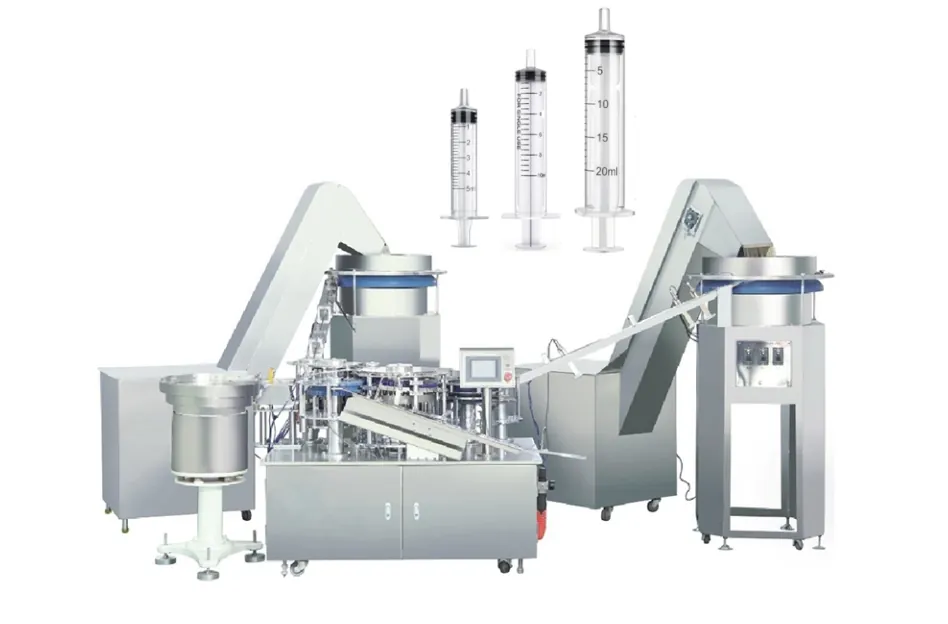
Disposable syringes are among the most fundamental tools in modern medicine, used for everything from routine vaccinations to critical care medication delivery. Behind every reliable syringe lies sophisticated manufacturing technology—syringe assembly machines that produce these essential devices with extraordinary precision and consistency.
The Complexity of Syringe Manufacturing
While a syringe may appear simple at first glance, it consists of multiple precision-engineered components that must work together perfectly. The main components include the barrel (the clear plastic cylinder with measurement markings), the plunger rod that pushes medication through, the rubber gasket or piston that creates an airtight seal, and the needle hub assembly. Each part has tight dimensional tolerances measured in hundredths of a millimeter.
How Syringe Assembly Machines Operate
Syringe assembly machines are highly automated production systems that bring together all components in a carefully orchestrated sequence. The process typically begins with barrel feeding and orientation, where injection-molded barrels are sorted and positioned for downstream assembly. Plunger rods and gaskets are pre-assembled in a separate station before being inserted into the barrels.
Advanced machines feature servo-driven insertion mechanisms that apply precisely controlled force when seating gaskets and plungers. This ensures consistent friction characteristics—critical for smooth, controlled injection performance. For safety syringes with retractable needles or shielding mechanisms, additional assembly stations integrate these safety features with exacting precision.
Quality Control Integration
Quality is paramount in syringe manufacturing, and modern assembly machines build inspection into every stage. Automated vision systems check for cosmetic defects on barrels, verify measurement markings are clear and accurate, and confirm proper gasket positioning. Leak testing stations apply vacuum or pressure to each assembled syringe to detect any seal failures. Force measurement systems verify that plunger movement falls within specified resistance ranges.
Production speeds are impressive—high-capacity lines can assemble 300 to 600 syringes per minute, operating 24/7 with minimal operator intervention. All production data, including quality test results, is automatically logged for traceability and regulatory compliance documentation.
Meeting Global Healthcare Demand
With global syringe consumption exceeding billions of units annually, automated assembly technology is essential for meeting demand while maintaining affordability and safety. The latest generation of syringe assembly machines supports rapid changeover between different sizes—from 1ml insulin syringes to 50ml irrigation syringes—enabling manufacturers to efficiently serve diverse market needs. As healthcare access expands worldwide, syringe assembly machines will remain cornerstone equipment in the medical device manufacturing landscape.